
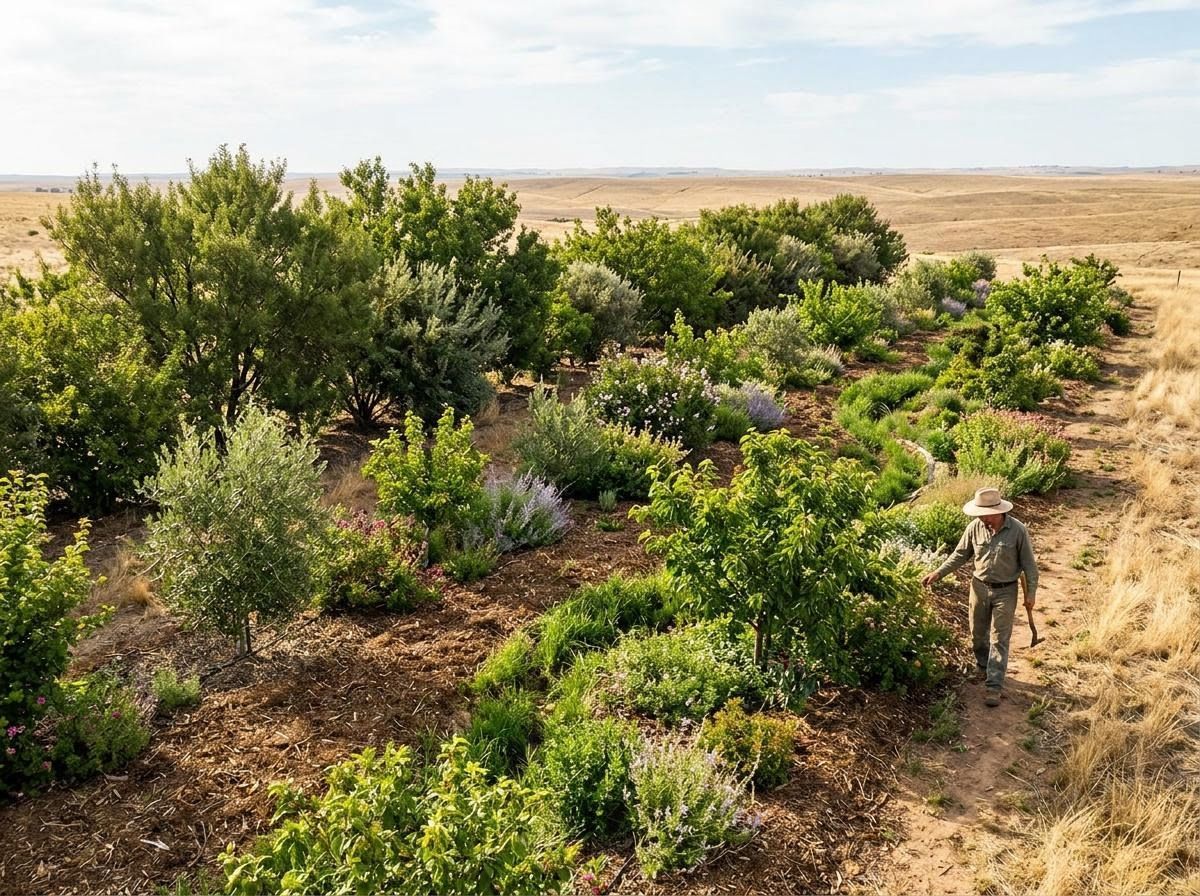
In arid and semi-arid regions, cultivating productive landscapes requires a thoughtful and strategic approach, moving beyond conventional methods to embrace nature-inspired designs. Understanding how to create self-sustaining ecological systems, or "guilds," that thrive with minimal external inputs is key to unlocking the full potential of large acreage. At Vital Soil Landscapes, we believe in empowering land stewards with the knowledge and tools to foster resilient and abundant environments, even in challenging dryland conditions. This involves a holistic perspective, integrating elements like windbreaks, shade, and companion planting to create synergistic relationships that conserve resources and boost productivity.
The Ecological Blueprint: Designing for Resilience
Designing productive dryland guilds begins with observing and mimicking natural ecosystems, where diverse plant communities work together to support each other and the surrounding environment. This approach is fundamental to Holistic Land Management, recognizing that every element, from soil microbes to the tallest trees, plays a vital role. By understanding these interconnections, we can strategically place plants that create beneficial microclimates, reduce water loss, and enhance biodiversity, moving away from monocultures towards a more resilient, integrated system. This proactive design minimizes stress on individual plants and maximizes the efficiency of limited resources, particularly precious water.
Strategic Elements: Windbreaks and Shade for Thriving Drylands
In dryland environments, wind and sun can be formidable adversaries, rapidly depleting soil moisture and stressing plants. Strategic windbreaks, composed of carefully selected trees and shrubs, act as living barriers, significantly reducing wind speed and subsequent evaporation. This creates a calmer, more humid microclimate in their lee, benefiting crops and other plantings. Simultaneously, integrating shade elements through taller trees or strategically placed structures can lower ground temperatures, further conserving soil moisture and protecting sensitive plants from intense solar radiation. These practices are cornerstones of effective Drought-Resilient Land Planning, ensuring that plants have the best possible chance to thrive by buffering them against harsh climatic conditions and optimizing the use of available water.
The Synergy of Companion Planting and Soil Regeneration Strategies
Companion planting goes beyond simple aesthetics; it’s a powerful ecological tool that leverages beneficial plant interactions to improve health and productivity. In dryland guilds, this might involve pairing nitrogen-fixing legumes with heavy feeders, or aromatic herbs that deter pests with susceptible crops. This diversity not only creates a more robust ecosystem but also actively contributes to Soil Regeneration Strategies. As plants grow and decay, they add organic matter, fostering a vibrant soil food web that improves water infiltration, nutrient cycling, and overall soil structure. Healthy, living soil, rich in microbial life, becomes a sponge, capable of holding more moisture and making nutrients available to plants, thus reducing the need for external inputs and increasing the system's inherent resilience.
Integrating for Enhanced System Productivity
The true power of dryland guilds lies in the synergistic integration of all these elements. Windbreaks and shade structures create a protective envelope, within which companion plants work in harmony to improve soil health and nutrient availability. This multi-layered approach not only conserves water and builds soil but also enhances habitat for beneficial insects and wildlife, fostering a more balanced and productive landscape. Furthermore, well-designed guilds, with their enhanced soil structure and diverse vegetation, can significantly contribute to Green Stormstormwater Infrastructure (GSI) by improving water infiltration and reducing runoff, turning rainfall into a valuable resource rather than a source of erosion. This comprehensive approach, often guided by Regenerative Agriculture Consulting, transforms challenging dryland into thriving, regenerative ecosystems.
Embracing the principles of dryland guilds represents a paradigm shift towards truly sustainable and productive land management. By thoughtfully designing landscapes that integrate windbreaks, shade, and companion planting, land stewards can create resilient ecosystems that thrive even in water-scarce conditions. This holistic approach, which enriches the land and fosters abundance, is at the heart of Vital Soil Landscapes' mission. To explore how these regenerative principles can be applied to transform your acreage into a vibrant, productive, and drought-resilient landscape, consider learning more about tailored ecological design strategies.