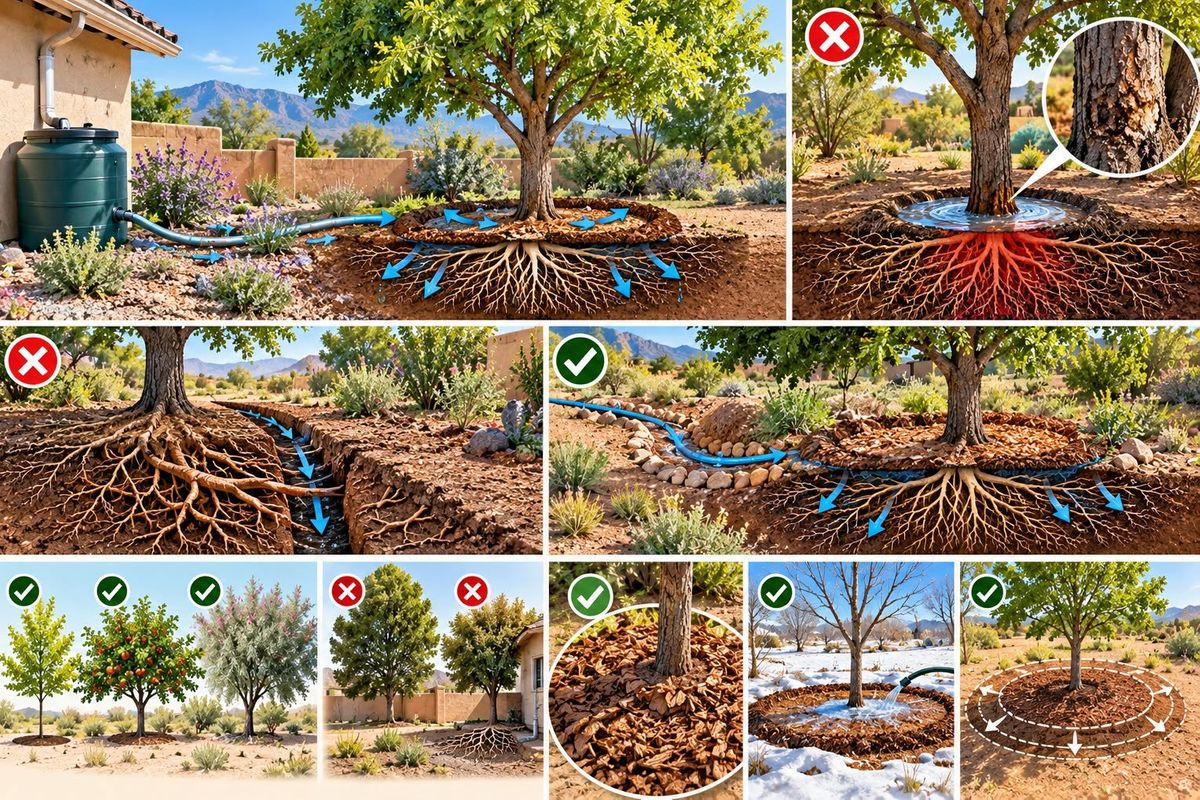
If you've put in a rain barrel, a cistern or a basin off your canale, you've already done the hard part. Albuquerque gets around nine inches of rain in a normal year, and most of it shows up in a few big monsoon storms. Catching that water is one of the best things you can do for a yard here.
Where people get into trouble is the last few feet: getting that water to the trees. I see the same handful of mistakes over and over, and most of them come from good intentions.
Water the drip line, not the trunk
The most common one is a basin or downspout outlet aimed right at the base of the tree. It makes sense, since the trunk is where the tree "is." But the roots that take up water aren't there. On an established tree, most of the fine feeder roots sit in the top foot or so of soil, out around the drip line (the edge of the canopy) and well past it.
Water pooling against the trunk does very little for the tree, and over time it causes real problems. Constantly wet bark at the root flare invites crown rot and fungal problems, and it can weaken the tree in ways that attract borers. Keep the first foot or so around the trunk dry and mounded slightly, and put your basin in a ring out at the drip line instead. For a young tree, that ring may be only a few feet across. For a mature elm or ash, it may be twenty feet or more.
Dig basins and swales carefully around big trees
Earthworks are great, but a trench cut through an existing root zone can do more damage than a dry summer. Elms, ash and cottonwoods all root shallow and wide. Slice a swale through those roots on the way to the tree and you've cut off part of its water supply and opened wounds for decay.
Around an established tree, keep earthworks shallow. Build berms up with soil and mulch instead of digging down, and route swales so they end near the drip line instead of crossing it. If you have to dig inside the canopy, dig by hand and work around any root thicker than your thumb rather than through it.
Not every tree needs the extra water
Harvested water is limited, so it's worth being choosy. Young trees in their first few years, fruit trees, and natives you want to establish (desert willow, New Mexico olive, netleaf hackberry) all make good use of it.
On the other hand, some trees you may not want to encourage. An old Siberian elm next to the house, a volunteer tree of heaven, or a big cottonwood planted too close to a foundation or sewer line will happily take every drop you give it and send roots chasing more. Point your water toward the trees you want to keep for the next thirty years.
Mulch the basin, and grow it with the tree
Bare basins crust over, lose water to evaporation and bake in July. A few inches of wood chips or shredded bark in the basin slows the water down, keeps the soil cooler, and feeds the soil life that trees depend on. Keep the mulch a few inches off the trunk itself. Piling it up against the bark causes the same moisture problems as a basin aimed at the trunk.
Trees outgrow their basins. Every few years, check where the drip line is now and widen the ring to match. A basin that was perfect for a five-year-old tree is too small for that tree at fifteen.
Don't forget winter
Our winters are often dry and sunny, with long warm stretches between storms. By December the cisterns are usually low or empty, and that's exactly when trees quietly dry out. Roots keep working whenever the ground isn't frozen, and evergreens lose moisture all winter.
On a mild day when temperatures are above freezing, give trees a slow, deep soak about once a month, out at the drip line, early enough that the water soaks in before night. A soaker hose or a hose on a trickle moved around the ring works well. If you have stored water left, this is a great use for it.
A quick checklist
- Basins and outlets out at the drip line, trunk area kept dry
- Berms built up around big trees, not trenches cut through roots
- Harvested water going to young, fruit and native trees first
- Mulch in the basin, pulled back from the trunk
- Basins widened as trees grow
- A deep soak about once a month in dry winter weather
If you're planning a new rainwater system, it's worth designing the tree basins in from the start rather than adding them later. And the Ciudad Soil and Water Conservation District's cost-share program can help cover the cost of some of these projects.
About the author: Bob Hale writes homeowner tree-care guides for Albuquerque Tree Pros (https://albuquerquetreepros.com), which connects Albuquerque homeowners with local tree trimming and removal help.