A Permaculture Design Certificate (PDC) is about much more than growing food or sustainable landscaping. It can change the way you look at your home, your work, your community, and the natural world around you.
At its heart, permaculture teaches you to slow down, observe, and understand how things are connected. You start looking at soil, water, plants, climate, energy, people, and wildlife as parts of one living system—and that changes the way you approach problems and opportunities.
1. See Your World Differently
One of the biggest changes a PDC can bring is simply learning to see things differently.
Instead of asking:
"How do I make this landscape work?"
you start asking:
"How can I work with what nature is already doing?"
You begin noticing where water naturally moves, where the sun hits throughout the day, where wind creates stress, where soil holds moisture, and how plants interact with one another.
You start seeing microclimates, patterns, relationships, and opportunities that may have been invisible before.
And this way of thinking doesn't stop at the garden. It can influence how you approach your home, your work, your community, and everyday decisions.
2. Gain Skills You Can Actually Use
Permaculture education is hands-on and practical. Depending on the program, you may explore:
Soil health and soil biology
Water harvesting and conservation
Food forests and perennial systems
Plant guilds
Regenerative landscaping
Ecological design
Climate-responsive site planning
Food production
Natural building
Small-scale agriculture
For people working in agriculture and horticulture, these concepts can be applied to orchards, farms, gardens, nurseries, landscapes, food forests, and other growing systems.
The goal isn't just to learn a list of techniques. It's to understand why a system works so you can make better decisions and develop solutions for different sites and situations.
3. Create a More Resilient Home and Landscape
You don't need hundreds of acres to put permaculture into practice.
What you learn can be applied to a backyard, urban property, community garden, farm, ranch, or larger landscape.
You can begin replacing conventional approaches with systems that:
Conserve water
Build healthy soil
Produce food
Support pollinators
Increase biodiversity
Make better use of available resources
Respond to local climate conditions
And it doesn't have to happen all at once. Sometimes one small change leads to another, and before long, you've created a much more connected and productive landscape.
4. Find Your People
A PDC can also be a wonderful way to find a community.
You meet people who are interested in growing food, restoring ecosystems, improving soil, conserving water, creating resilient communities, and finding practical responses to environmental challenges.
Your classmates may become collaborators, friends, clients, business partners, or simply people you stay connected with because you share a common interest in creating healthier places.
That community can be just as valuable as the information you learn in the classroom.
5. Discover New Career Possibilities
A PDC can complement careers in:
Agriculture
Horticulture
Landscaping
Regenerative agriculture
Environmental work
Ecological design
Education
Consulting
Land management
Community development
For some people, a PDC may be the beginning of a completely new career. For others, it can add another layer of expertise to work they are already doing.
It may also provide a foundation for developing a landscape design practice, consulting business, educational program, farm enterprise, or other regenerative venture.
A certificate isn't a guarantee of employment. But it can give you something valuable: a framework for thinking, a design vocabulary, practical skills, and the confidence to start applying what you've learned.
6. Turn Knowledge Into Action
Perhaps the most meaningful change is moving from concern to capability.
It's easy to feel overwhelmed by drought, declining soil health, biodiversity loss, water limitations, or other environmental challenges.
Permaculture gives you a way to start doing something.
You can begin with your own property. You can help a client redesign a landscape. You can improve an agricultural system. You can teach others. Or you can build a career around creating healthier, more resilient places.
You don't have to solve everything.
You just have to start where you are.
A PDC Isn't Just About Designing Landscapes
Permaculture is ultimately about learning to design systems that support life.
You learn to observe more carefully, ask better questions, recognize relationships, use resources more thoughtfully, and design with the long term in mind.
And sometimes, the biggest transformation isn't what you learn to do—it's how you learn to think.
Your landscape can become your classroom.
Your skills can become your livelihood.
Your knowledge can become a way to help others.
Ready to Begin?
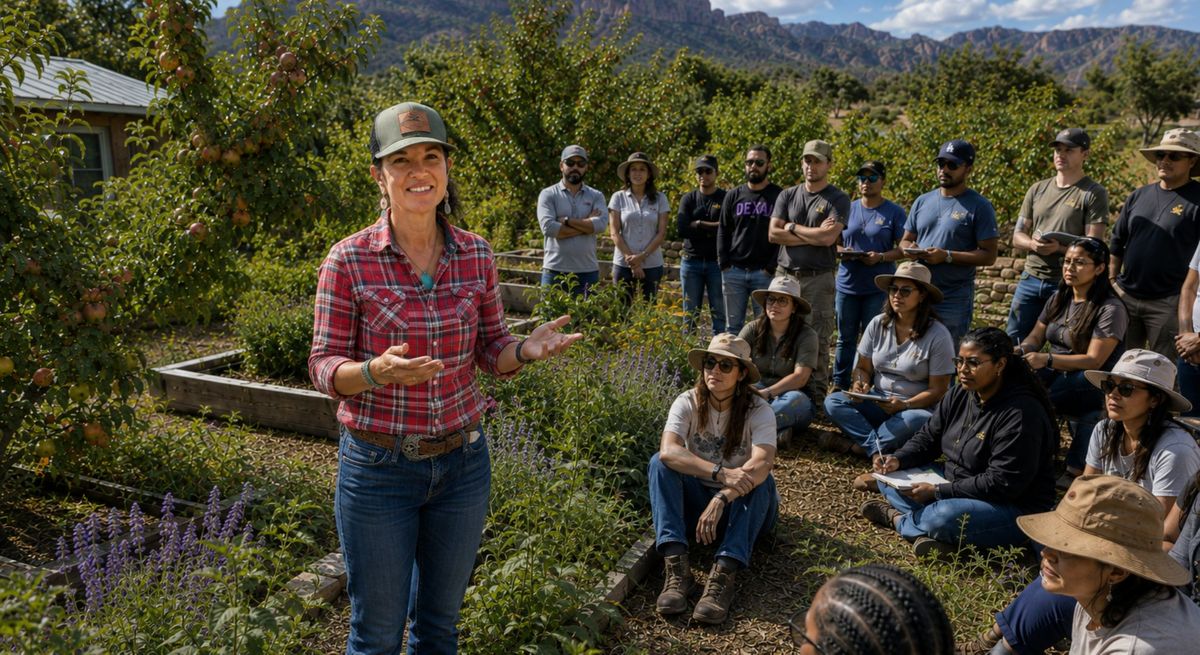
Whether you're a homeowner, farmer, rancher, policymaker, or considering a career change, permaculture offers practical ways to rethink how we live, work, grow, and design. Vital Soil Landscapes provides hands-on workshops, consulting, and regenerative landscape training for those interested in putting these ideas into practice.
Learn. Design. Create. Regenerate.