Our planet’s future hinges on how we manage our land, and the health of our soil is arguably the most critical component. Integrating permaculture principles and robust soil regeneration strategies into regional climate action plans offers a powerful, nature-led path towards resilience. At Vital Soil Landscapes, we believe that understanding this synergy is key to crafting sustainable landscapes that thrive in a changing climate, moving beyond reactive measures to proactive, regenerative solutions.
The Foundation of Climate Resilience: Healthy Soil
Soil is far more than just dirt; it's a living ecosystem that can play a monumental role in combating climate change. Healthy soil acts as a massive carbon sink, drawing atmospheric carbon dioxide down and storing it, effectively mitigating greenhouse gas emissions. Beyond carbon sequestration, robust soil supports biodiversity, enhances water infiltration, and improves nutrient cycling. Prioritizing soil regeneration strategies means we're not just planting trees; we're building the very biological infrastructure needed for ecosystems to withstand environmental stressors, making our communities inherently more resilient to climate impacts.
Permaculture as a Blueprint for Policy
Permaculture offers a design framework that mimics natural ecosystems, focusing on efficiency, perennial systems, and waste-free cycles. When applied at a regional level, these principles can inform policies that lead to more sustainable land use and community development. By fostering diverse, productive, and low-input landscapes, permaculture provides practical, nature-based solutions that can be integrated into urban planning, agricultural policy, and ecosystem restoration projects. This approach naturally aligns with holistic land management, encouraging us to view entire landscapes as interconnected systems rather than isolated components, ultimately leading to Drought-Resilient Land Planning.
Policy Levers for Regenerative Transformation
Translating permaculture ideals into actionable policy requires innovative thinking and collaboration across sectors. Local and regional governments can incentivize regenerative practices through grants, tax breaks, and streamlined permitting for projects that enhance soil health. Policies can support the transition to regenerative agriculture consulting for farmers and ranchers, encourage the use of native plants, and mandate ecological restoration in development projects. By embedding these practices into official plans, we empower communities and landowners to adopt regenerative approaches, fostering a widespread shift towards more sustainable land stewardship.
Building Resilient Infrastructure with Nature
Beyond agricultural and natural landscapes, integrating soil health into urban and suburban environments is crucial. Green Stormwater Infrastructure (GSI), for instance, utilizes vegetated systems like rain gardens, bioswales, and permeable pavements to manage stormwater runoff, filter pollutants, and recharge groundwater, all while enhancing urban biodiversity. These GSI elements rely on healthy, functional soil to perform effectively, demonstrating how policy can drive practical, on-the-ground solutions that benefit both people and planet. Such initiatives create more livable cities and demonstrate a commitment to community well-being and ecological integrity.
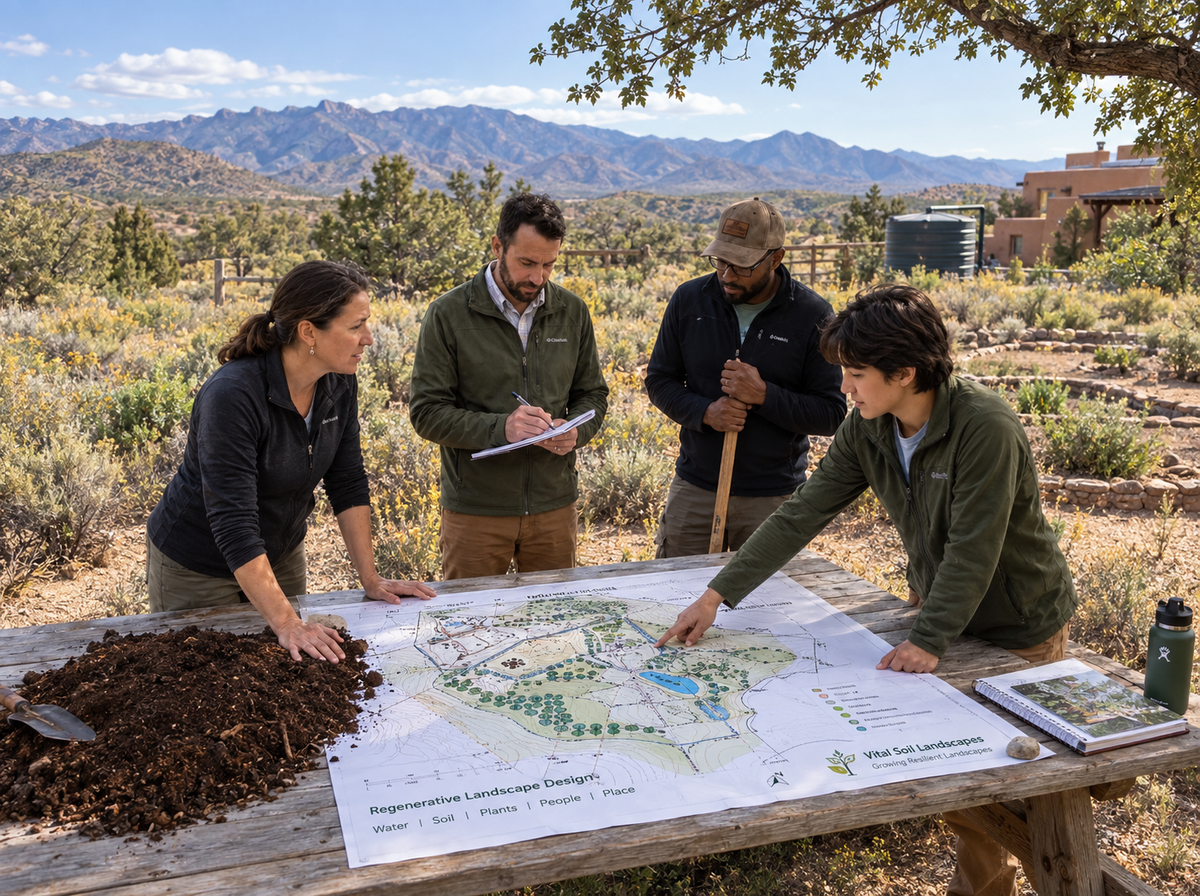
Embracing the nexus of policy and permaculture is not merely an option, but a necessity for forging truly resilient and regenerative communities. By integrating comprehensive Soil Regeneration Strategies into our regional climate action plans, we lay the groundwork for a future where both human and natural systems can thrive. Vital Soil Landscapes is dedicated to fostering these sustainable transformations. To explore how these powerful, nature-led solutions can be tailored for your specific landscape and community goals, discover more about regenerative landscape design and planning.